Fauna Spotter Catchers
Wildlife checks, animal handling and support alongside your clearing crew.
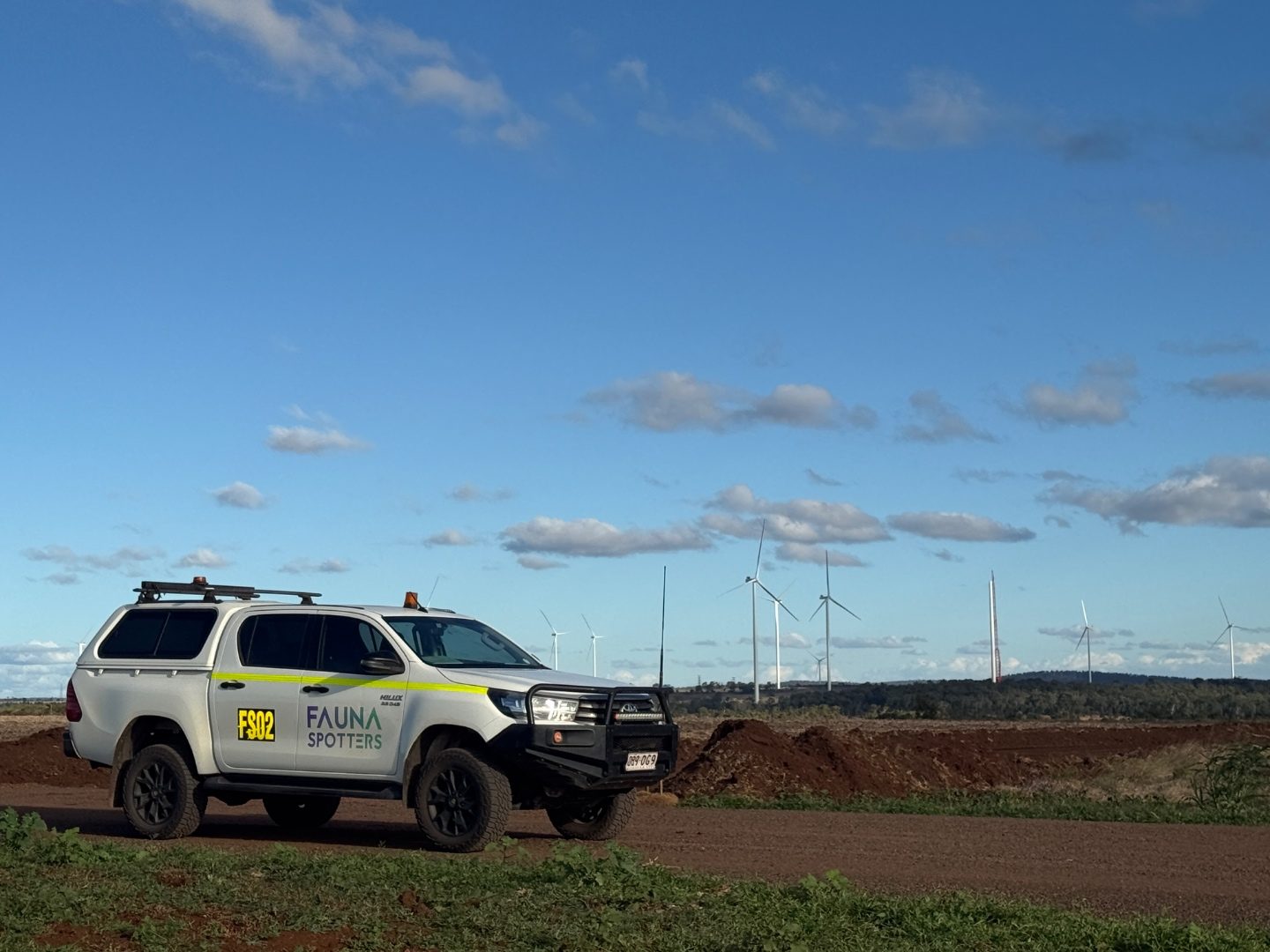
Fauna Spotter Catchers and Koala Spotters support vegetation clearing around Orange, within the Orange City Council area. Local work contexts include agricultural and fruit growing land, roads, water infrastructure and gold and copper mining. Share your Orange site, dates and approval conditions so we can confirm scope and availability.
Choose the support your job needs. Specialist surveys are arranged around the site, target species and dates.
Wildlife checks, animal handling and support alongside your clearing crew.
Dedicated koala searches and monitoring for works in koala habitat.
Fauna and habitat checks before work starts, with findings recorded for your project.
Site-specific plans setting out how wildlife will be managed during the works.
Thermal imaging to help locate wildlife and guide follow-up checks.
By arrangement
Targeted searches using trained dog-and-handler teams.
By arrangement
Relevant work includes residential subdivision clearing, alongside road and water infrastructure, agricultural land and gold or copper mining.
Nearby habitats include the diverse environment around Mount Canobolas and old-growth forest in steeper parts of Nangar National Park. The wider Orange region supports more than 100 threatened species and ecological communities, including the endangered swift parrot and Booroolong frog. Borenore Karst Conservation Reserve provides habitat for eastern bent-winged bats; Nangar National Park is also home to peregrine falcons, eastern grey kangaroos, red-necked wallabies, eastern long-necked tortoises and spotted grass frogs.
25 ha or more on lots under 1 ha), when the land is on the Biodiversity Values Map, or when a test of significance finds a likely significant impact on threatened species.
We check the approval conditions for your site before work starts and plan the spotter role around them.
Mapped potential, not confirmed sightings. Select a count to explore species names and profiles.
50 km around Orange. Library snapshot: 30 Oct 2026.
Total significant species: 129
Each species counts once in the total. Additional groups can overlap with one another and the conservation categories.
Mapped potential, not confirmed sightings. This is not a site survey or a complete wildlife inventory.
A 50 km circle centred on Orange, not a council boundary. It includes nearby areas and may extend across state boundaries or coastal waters.
Generated from Fauna Spotters significant-species screening library on 30 Oct 2026. Underlying source dates vary. Counts use mapped ranges and generalised distribution estimates, not a live ALA or WildNet records search. Marine-only profiles are excluded; coastal species may be included.
State and national conservation categories are shown separately. Priority and other conservation categories are not necessarily threatened listings. The total includes all significant fauna in the screening areas, including any adjacent jurisdictions. Listings may apply to only part of an area. Colonial breeding is an ecological grouping, not a threat status. Check individual profiles for listing details and source references.
Screening centres, using GeoNames (CC BY 4.0):
Central West NSW mining, renewables and agricultural corridor clearing.
Enter your site, dates and crew needs for an itemised quote. We’ll confirm availability before booking.
In New South Wales the work is covered by a Biodiversity conservation licence (scientific licence, ecological survey or consultancy class), issued by the Department of Climate Change, Energy, the Environment and Water under the Biodiversity Conservation Act 2016 and obtained for each project. Our management plans and crew credentials are ready to go, and our applications are pre-filled, so we can lodge as soon as your project is confirmed for the fastest possible path to approval.
Any additional permissions and approval conditions are checked for the job.
Check for habitat features such as old-growth forest on steeper slopes, valleys and natural springs, while recognising habitats vary across the region. The wider Orange region supports threatened species, including the endangered swift parrot. Your site approvals set out what is required.
Yes. We supply dedicated Koala Spotters for projects inside mapped NSW koala habitat, in line with state koala conservation requirements.
Send the site, dates, shifts and approval conditions. We will check crew availability and any permissions before confirming a start.
In New South Wales the work is covered by a Biodiversity conservation licence (scientific licence, ecological survey or consultancy class), issued by the Department of Climate Change, Energy, the Environment and Water under the Biodiversity Conservation Act 2016 and obtained for each project. Our management plans and crew credentials are ready to go, and our applications are pre-filled, so we can lodge as soon as your project is confirmed for the fastest possible path to approval. Harm to threatened species needs a threatened species licence, and fauna survey work usually also needs an Animal Research Authority.
Yes. Share the clearing footprint, relevant approvals and any existing surveys. We will scope the plan and reporting requirements for your project.