Fauna Spotter Catchers
Wildlife checks, animal handling and support alongside your clearing crew.

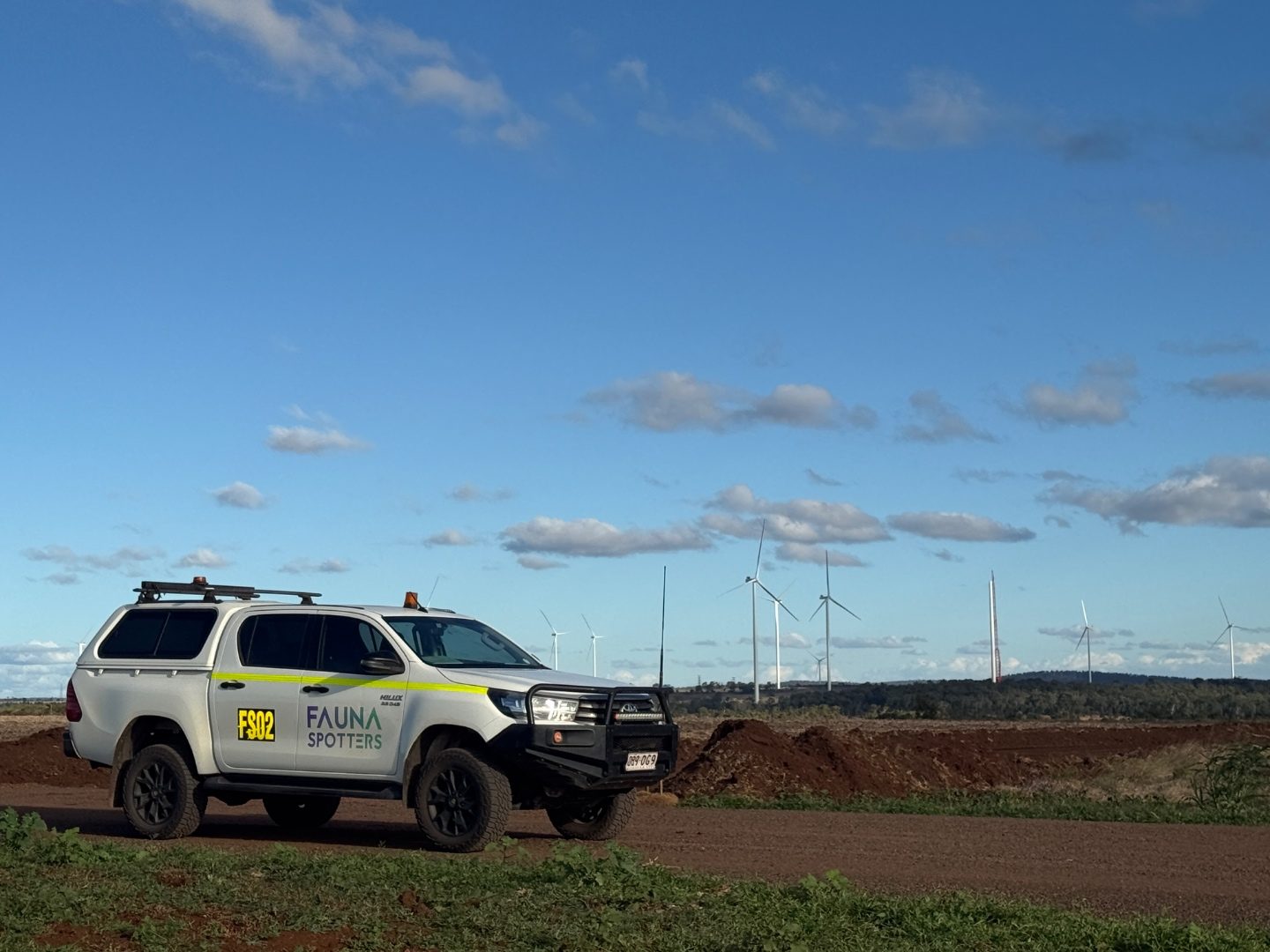
Our Far North team is based in Cairns. We supply licensed Fauna Spotter Catchers and ecologists to road, mining, energy, council and community infrastructure projects from Cooktown and Laura up the Peninsula Developmental Road to Coen, Weipa and the tip. Get an itemised quote online in under two minutes. Share your Cape York site, dates and approval conditions so we can confirm scope and availability.
Choose the support your job needs. Specialist surveys are arranged around the site, target species and dates.
Wildlife checks, animal handling and support alongside your clearing crew.
Fauna and habitat checks before work starts, with findings recorded for your project.
Site-specific plans setting out how wildlife will be managed during the works.
Thermal imaging to help locate wildlife and guide follow-up checks.
By arrangement
Targeted searches using trained dog-and-handler teams.
By arrangement
Fauna Spotters has teams based in Townsville and Cairns. That means jobs up the Peninsula Developmental Road are run by people who live and work in the north and know the country, the wet season and the access. Larger or longer programs are backed by our wider team across Queensland.
Most Cape York construction runs in the dry season, so clearing and fauna support need to be locked in early. Public projects under way or coming up include:
Roads across the Cape close or become limited in the wet, so most clearing is squeezed into a few months. Send us your program as soon as you have one. We plan the team, camps, communications and remote rosters around your dates, and work alongside Traditional Owner rangers and cultural heritage monitors where your project has them.
Cape York covers tropical savanna, gallery forest along rivers, heath, wetlands and rainforest pockets in the ranges. Clearing plans here often need to consider species such as the golden-shouldered parrot, palm cockatoo, spotted cuscus and the frogs and reptiles that use creek lines in the wet season. Our team searches ahead of clearing, stages works around nesting and shelter sites, and records every animal found in a format that suits your approval conditions.
Mapped potential, not confirmed sightings. Select a count to explore species names and profiles.
4 service-area screens across Cape York. Library snapshot: 20 Nov 2026.
Total significant species: 139
Each species counts once in the total. Additional groups can overlap with one another and the conservation categories.
Mapped potential, not confirmed sightings. This is not a site survey or a complete wildlife inventory.
Combined 50 km circles around the 4 service centres listed below, with each species counted once. This is not a screen of the entire region, and is not an administrative boundary. Areas between and beyond the circles are not covered.
Generated from Fauna Spotters significant-species screening library on 20 Nov 2026. Underlying source dates vary. Counts use mapped ranges and generalised distribution estimates, not a live ALA or WildNet records search. Marine-only profiles are excluded; coastal species may be included.
State and national conservation categories are shown separately. Priority and other conservation categories are not necessarily threatened listings. The total includes all significant fauna in the screening areas, including any adjacent jurisdictions. Listings may apply to only part of an area. Colonial breeding is an ecological grouping, not a threat status. Check individual profiles for listing details and source references.
Screening centres, using GeoNames (CC BY 4.0):
Discuss support for Peninsula Developmental Road sealing, culvert and floodway works; Bauxite mining, port and haul road works around Weipa; Council and community water, sewer, housing and airstrip works. We confirm the crew, access and timing against your site brief.
Enter your site, dates and crew needs for an itemised quote. We’ll confirm availability before booking.
We hold the Rehabilitation permit (spotter catcher) and can supply licensed personnel across Queensland. The licence is issued by the Department of the Environment, Tourism, Science and Innovation (DETSI) under the Nature Conservation Act 1992. Copies of licences, insurance and induction records are supplied with every quote.
Any additional permissions and approval conditions are checked for the job.
Yes. We support clearing for road, culvert and floodway works along the Peninsula Developmental Road, from Lakeland and Laura to Coen and the Weipa turnoff, on camp-based or swing rosters.
Yes. Send us your program early and we will plan the team and rosters for the dry season window, including staged clearing and breaks for access or weather.
Use the instant quote tool on our website. Enter your site, dates and crew needs and you get an itemised quote in under two minutes, with labour, equipment and duration discounts shown line by line. Where flights are required, we confirm those costs with you before acceptance. You can accept it online or call 1800 4 FAUNA to talk it through.
Yes. We support day work from Cairns, camp-based work and swing rosters for longer remote programs, and our crews carry the kit and communications needed for remote sites.
Send the site, dates, shifts and approval conditions. We will check crew availability and any permissions before confirming a start.
We hold the Rehabilitation permit (spotter catcher) and can supply licensed personnel across Queensland. The licence is issued by the Department of the Environment, Tourism, Science and Innovation (DETSI) under the Nature Conservation Act 1992. Copies of licences, insurance and induction records are supplied with every quote. Tampering with an animal breeding place needs an approved Species Management Program, and clearing in mapped koala habitat needs a dedicated Koala Spotter under the Koala Conservation Plan.
Yes. Share the clearing footprint, relevant approvals and any existing surveys. We will scope the plan and reporting requirements for your project.