Fauna Spotter Catchers
Wildlife checks, animal handling and support alongside your clearing crew.
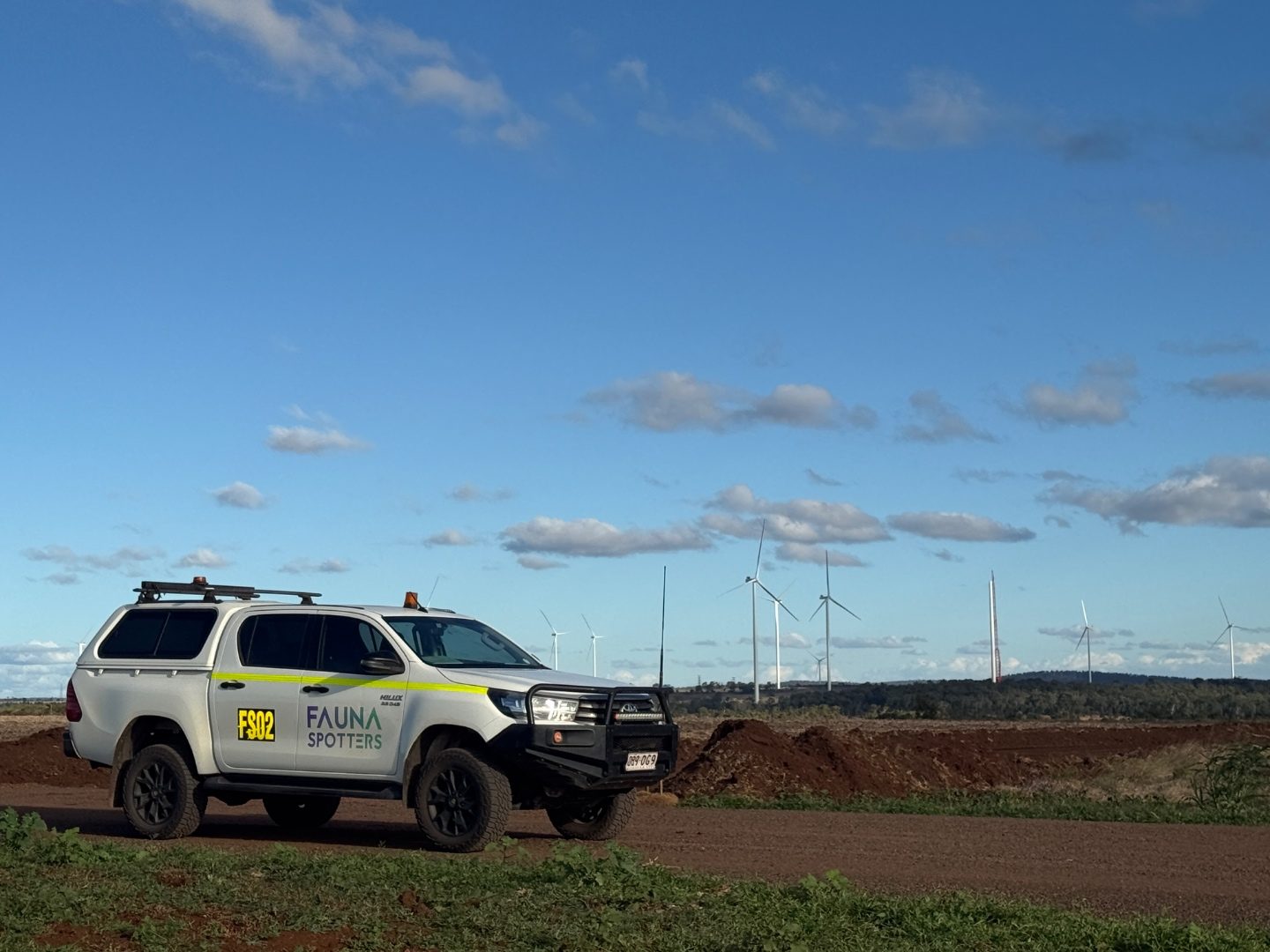
Fauna Spotter Catchers and Koala Spotters support vegetation clearing works around the Gladstone Regional Council area. The region includes port infrastructure supporting LNG and coal exports, alongside coastal wetlands, rainforest and open eucalypt forest. Share your Gladstone site, dates and approval conditions so we can confirm scope and availability.
Choose the support your job needs. Specialist surveys are arranged around the site, target species and dates.
Wildlife checks, animal handling and support alongside your clearing crew.
Dedicated koala searches and monitoring for works in koala habitat.
Fauna and habitat checks before work starts, with findings recorded for your project.
Site-specific plans setting out how wildlife will be managed during the works.
Thermal imaging to help locate wildlife and guide follow-up checks.
By arrangement
Targeted searches using trained dog-and-handler teams.
By arrangement
Potential clearing contexts include port infrastructure, industrial sites and energy projects in a region with a prominent aluminium industry and port exports.
The wider region includes Wild Cattle Island’s vine forest, Bulburin’s rainforest and open eucalypt forest, and wetlands. Wildlife includes koalas, spotted-tailed quolls, long-nosed potoroos, pademelons, frogs, water mice and grey-headed flying-foxes. Wild Cattle Island is important for migratory birds and is a turtle rookery.
In Queensland, clearing remnant and regrowth native vegetation is regulated under the Vegetation Management Act 1999. Separately, tampering with a breeding place that a protected animal is using to incubate or rear young, such as an occupied hollow or nest, needs an approved species management program.
Under the Nature Conservation (Koala) Conservation Plan 2017, Gladstone Region is split between koala districts B and C. In district B, clearing koala habitat trees must follow the sequential clearing conditions, including staged clearing on sites over 3 ha and a break from 6pm to 6am between stages. In any area determined as a koala habitat area, clearing koala habitat trees with a trunk over 10 cm in diameter must be done with a koala spotter present.
We check the approval conditions for your site before work starts and plan the spotter role around them.
Mapped potential, not confirmed sightings. Select a count to explore species names and profiles.
50 km around Gladstone. Library snapshot: 30 Oct 2026.
Total significant species: 124
Each species counts once in the total. Additional groups can overlap with one another and the conservation categories.
Mapped potential, not confirmed sightings. This is not a site survey or a complete wildlife inventory.
A 50 km circle centred on Gladstone, not a council boundary. It includes nearby areas and may extend across state boundaries or coastal waters.
Generated from Fauna Spotters significant-species screening library on 30 Oct 2026. Underlying source dates vary. Counts use mapped ranges and generalised distribution estimates, not a live ALA or WildNet records search. Marine-only profiles are excluded; coastal species may be included.
State and national conservation categories are shown separately. Priority and other conservation categories are not necessarily threatened listings. The total includes all significant fauna in the screening areas, including any adjacent jurisdictions. Listings may apply to only part of an area. Colonial breeding is an ecological grouping, not a threat status. Check individual profiles for listing details and source references.
Screening centres, using GeoNames (CC BY 4.0):
Gladstone port, LNG and heavy-industry vegetation clearing.
Enter your site, dates and crew needs for an itemised quote. We’ll confirm availability before booking.
We hold the Rehabilitation permit (spotter catcher) and can supply licensed personnel across Queensland. The licence is issued by the Department of the Environment, Tourism, Science and Innovation (DETSI) under the Nature Conservation Act 1992. Copies of licences, insurance and induction records are supplied with every quote.
Any additional permissions and approval conditions are checked for the job.
Before clearing, check the vegetation, wetland connections and fauna likely to use the site; regional parks support species including koala, spotted-tailed quoll, long-nosed potoroo and water mouse. Your site approvals set out what is required.
Yes. We supply dedicated Koala Spotters for projects inside mapped QLD koala habitat, in line with state koala conservation requirements.
Send the site, dates, shifts and approval conditions. We will check crew availability and any permissions before confirming a start.
We hold the Rehabilitation permit (spotter catcher) and can supply licensed personnel across Queensland. The licence is issued by the Department of the Environment, Tourism, Science and Innovation (DETSI) under the Nature Conservation Act 1992. Copies of licences, insurance and induction records are supplied with every quote. Tampering with an animal breeding place needs an approved Species Management Program, and clearing in mapped koala habitat needs a dedicated Koala Spotter under the Koala Conservation Plan.
Yes. Share the clearing footprint, relevant approvals and any existing surveys. We will scope the plan and reporting requirements for your project.