Fauna Spotter Catchers
Wildlife checks, animal handling and support alongside your clearing crew.
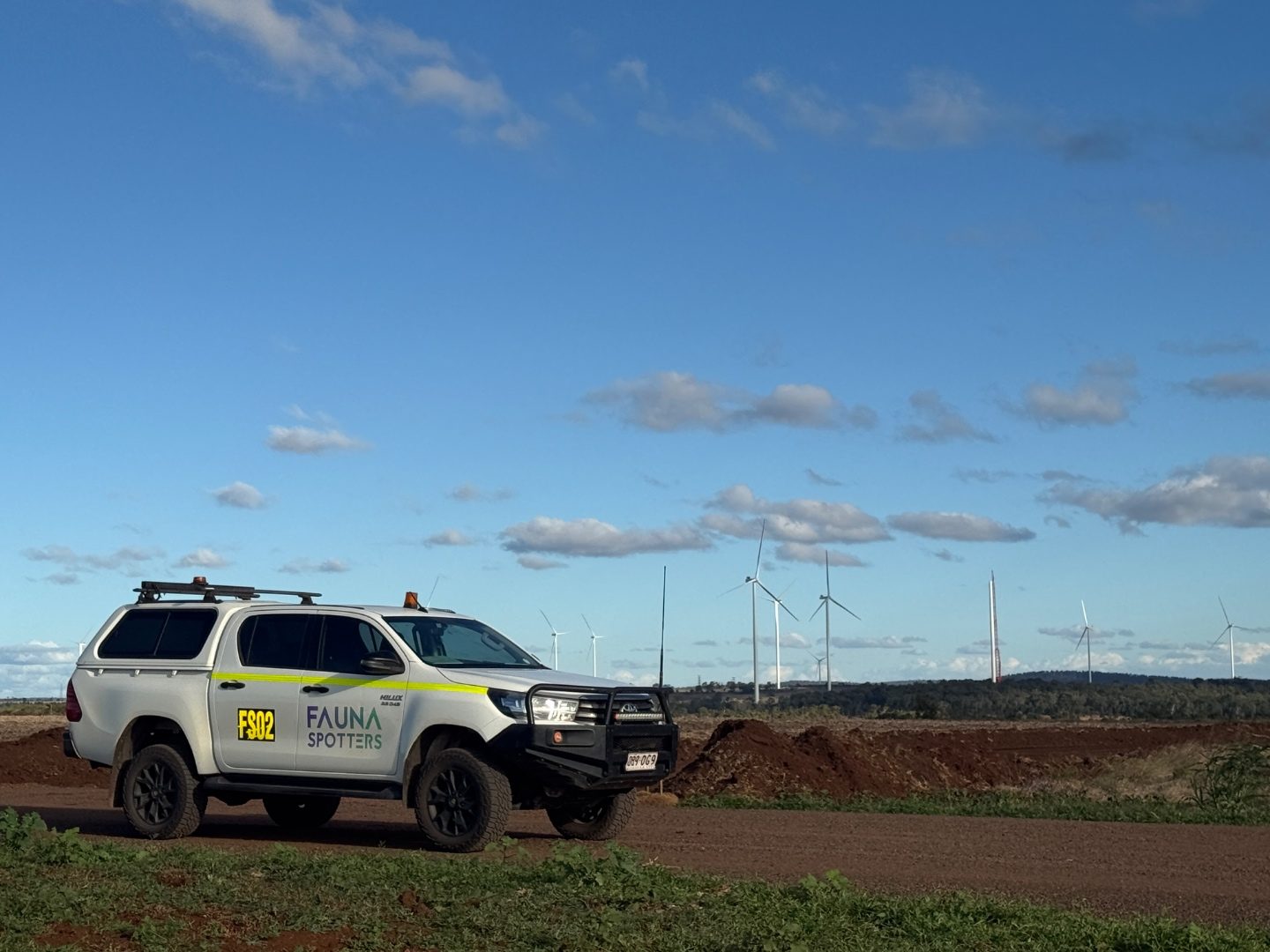
Fauna Spotter Catchers support vegetation clearing around Port Hedland in the Town of Port Hedland. Coastal tidal creeks, iron ore processing and port facilities shape the area, with South Hedland 13 kilometres inland. Share your Port Hedland site, dates and approval conditions so we can confirm scope and availability.
Choose the support your job needs. Specialist surveys are arranged around the site, target species and dates.
Wildlife checks, animal handling and support alongside your clearing crew.
Fauna and habitat checks before work starts, with findings recorded for your project.
Site-specific plans setting out how wildlife will be managed during the works.
Thermal imaging to help locate wildlife and guide follow-up checks.
By arrangement
Targeted searches using trained dog-and-handler teams.
By arrangement
Works in the area include iron ore processing and port infrastructure, as well as council projects such as Wilson Street and Redbank Bridge safety improvements and Gilbert Street flood pump station upgrades.
Port Hedland’s tidal creeks and Cape Keraudren’s mangrove-lined bays are part of the local coastal setting, and the mainland coast is flatback turtle nesting habitat. A relocation from the Kingsford Smith Business Park stage 2 subdivision included Northern Burrowing Frogs, Lesser Hairy-footed Dunnarts, Sandy Inland Mice and Mulga Snakes. A DWER assessment recorded 66 conservation-significant fauna species within 50 kilometres of a clearing application area and identified Brush-tailed Mulgara and Greater Bilby as potentially occurring there based on habitat.
In Western Australia, clearing native vegetation needs a clearing permit under the Environmental Protection Act 1986 unless an exemption applies. Permits are issued by the Department of Water and Environmental Regulation, or by the Department of Mines, Petroleum and Exploration for mineral and petroleum activities.
We check the approval conditions for your site before work starts and plan the spotter role around them.
Mapped potential, not confirmed sightings. Select a count to explore species names and profiles.
50 km around Port Hedland. Library snapshot: 30 Oct 2026.
Total significant species: 66
Each species counts once in the total. Additional groups can overlap with one another and the conservation categories.
Mapped potential, not confirmed sightings. This is not a site survey or a complete wildlife inventory.
A 50 km circle centred on Port Hedland, not a council boundary. It includes nearby areas and may extend across state boundaries or coastal waters.
Generated from Fauna Spotters significant-species screening library on 30 Oct 2026. Underlying source dates vary. Counts use mapped ranges and generalised distribution estimates, not a live ALA or WildNet records search. Marine-only profiles are excluded; coastal species may be included.
State and national conservation categories are shown separately. Priority and other conservation categories are not necessarily threatened listings. The total includes all significant fauna in the screening areas, including any adjacent jurisdictions. Listings may apply to only part of an area. Colonial breeding is an ecological grouping, not a threat status. Check individual profiles for listing details and source references.
Screening centres, using GeoNames (CC BY 4.0):
Pilbara port, iron ore and remote-corridor clearing.
Enter your site, dates and crew needs for an itemised quote. We’ll confirm availability before booking.
In Western Australia the work is covered by a Fauna taking (relocation) licence, issued by the Department of Biodiversity, Conservation and Attractions under the Biodiversity Conservation Act 2016 and Biodiversity Conservation Regulations 2018 and obtained for each project. Our management plans and crew credentials are ready to go, and our applications are pre-filled, so we can lodge as soon as your project is confirmed for the fastest possible path to approval.
Any additional permissions and approval conditions are checked for the job.
A DWER assessment recorded 66 conservation-significant fauna species within 50 kilometres of a Port Hedland clearing application area, including Brush-tailed Mulgara and Greater Bilby as potentially occurring based on habitat. Your site approvals set out what is required.
Send the site, dates, shifts and approval conditions. We will check crew availability and any permissions before confirming a start.
In Western Australia the work is covered by a Fauna taking (relocation) licence, issued by the Department of Biodiversity, Conservation and Attractions under the Biodiversity Conservation Act 2016 and Biodiversity Conservation Regulations 2018 and obtained for each project. Our management plans and crew credentials are ready to go, and our applications are pre-filled, so we can lodge as soon as your project is confirmed for the fastest possible path to approval. The relocation licence cannot cover threatened species. Taking or disturbing threatened fauna needs a separate section 40 Ministerial authorisation, applied for at the same time.
Yes. Share the clearing footprint, relevant approvals and any existing surveys. We will scope the plan and reporting requirements for your project.