Fauna Spotter Catchers
Wildlife checks, animal handling and support alongside your clearing crew.

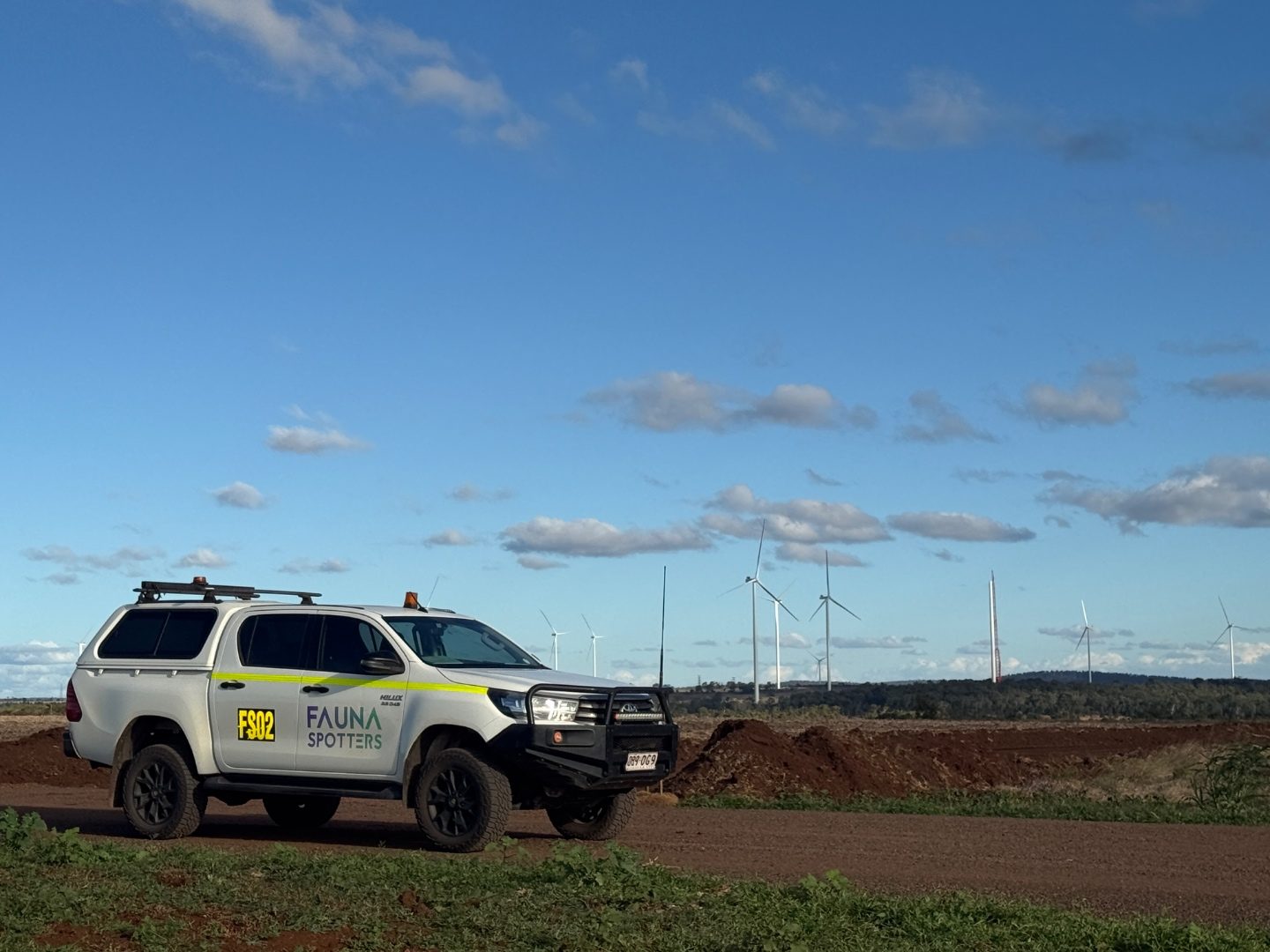
Fauna Spotter Catchers support clearing works around Winton in the Winton Shire Council area, which covers 53,935 square kilometres of Central Western Queensland on the Landsborough Highway. Gidgee woodland, Mitchell grass downs, spinifex and dry creek beds make up much of the country, and council minutes describe proposed gypsum premises and new residential development. Share your Winton site, dates and approval conditions so we can confirm scope and availability.
Choose the support your job needs. Specialist surveys are arranged around the site, target species and dates.
Wildlife checks, animal handling and support alongside your clearing crew.
Fauna and habitat checks before work starts, with findings recorded for your project.
Site-specific plans setting out how wildlife will be managed during the works.
Thermal imaging to help locate wildlife and guide follow-up checks.
By arrangement
Targeted searches using trained dog-and-handler teams.
By arrangement
Council minutes describe proposed premises for processing, storing and transporting gypsum, and consider Residential Activation Fund applications for Landsborough Highway residential development. These identify industrial and residential development contexts where vegetation clearing may be relevant.
Habitats include Mitchell grass-covered cracking clay, gidgee woodland, mulga, spinifex, dry creek beds and riverine and palustrine wetlands. Wildlife records include Julia Creek dunnarts, plains rats, dusky hopping-mice, purple-necked rock-wallabies and Opalton grasswrens. The dusky hopping-mouse is listed as endangered in Queensland and vulnerable nationally; the Julia Creek dunnart is listed as vulnerable.
In Queensland, clearing remnant and regrowth native vegetation is regulated under the Vegetation Management Act 1999. Separately, tampering with a breeding place that a protected animal is using to incubate or rear young, such as an occupied hollow or nest, needs an approved species management program.
We check the approval conditions for your site before work starts and plan the spotter role around them.
Mapped potential, not confirmed sightings. Select a count to explore species names and profiles.
50 km around Winton. Library snapshot: 30 Oct 2026.
Total significant species: 33
Each species counts once in the total. Additional groups can overlap with one another and the conservation categories.
Mapped potential, not confirmed sightings. This is not a site survey or a complete wildlife inventory.
A 50 km circle centred on Winton, not a council boundary. It includes nearby areas and may extend across state boundaries or coastal waters.
Generated from Fauna Spotters significant-species screening library on 30 Oct 2026. Underlying source dates vary. Counts use mapped ranges and generalised distribution estimates, not a live ALA or WildNet records search. Marine-only profiles are excluded; coastal species may be included.
State and national conservation categories are shown separately. Priority and other conservation categories are not necessarily threatened listings. The total includes all significant fauna in the screening areas, including any adjacent jurisdictions. Listings may apply to only part of an area. Colonial breeding is an ecological grouping, not a threat status. Check individual profiles for listing details and source references.
Screening centres, using GeoNames (CC BY 4.0):
Central West grazing, wind farm and road corridor clearing.
Enter your site, dates and crew needs for an itemised quote. We’ll confirm availability before booking.
We hold the Rehabilitation permit (spotter catcher) and can supply licensed personnel across Queensland. The licence is issued by the Department of the Environment, Tourism, Science and Innovation (DETSI) under the Nature Conservation Act 1992. Copies of licences, insurance and induction records are supplied with every quote.
Any additional permissions and approval conditions are checked for the job.
Check the site for creek lines, riverine or palustrine wetlands, Mitchell grasslands and dense spinifex. These habitats are associated with species including the Julia Creek dunnart, dusky hopping-mouse and Opalton grasswren. Your site approvals set out what is required.
Send the site, dates, shifts and approval conditions. We will check crew availability and any permissions before confirming a start.
We hold the Rehabilitation permit (spotter catcher) and can supply licensed personnel across Queensland. The licence is issued by the Department of the Environment, Tourism, Science and Innovation (DETSI) under the Nature Conservation Act 1992. Copies of licences, insurance and induction records are supplied with every quote. Tampering with an animal breeding place needs an approved Species Management Program, and clearing in mapped koala habitat needs a dedicated Koala Spotter under the Koala Conservation Plan.
Yes. Share the clearing footprint, relevant approvals and any existing surveys. We will scope the plan and reporting requirements for your project.